Commercial Loan Programs Comparison 2026: Rates Terms LTV and Requirements Guide
If you are a business owner or real estate investor searching for commercial financing options, you know how important it is to compare commercial loan programs. Different loans offer varying interest rates, loan-to-value ratios, down payment requirements, and qualification criteria. This guide presents a clear comparison of 17 popular commercial loan programs available in 2026 to help you identify the best fit for purchasing, refinancing, or constructing commercial properties.
For a broader overview of how commercial loans work, check out our ultimate guide to commercial loans.
Commercial Loan Products and Terms Comparison Table
The table below summarizes key details for each program. Interest rates, LTV ratios, and terms are based on typical market conditions and may vary by borrower profile and property type. Contact us for current personalized quotes.
SL | Loan Program | Interest Rate Range (%) | LTV (Max) | LTC % | ARV | Down Payment (Min) | Loan Term | Credit Score (Min) | Bank Statement | Tax Return |
1 | 9-12 | Up to 70% | N/A | No | 30% | 12-36 months | 620+ | Required | No | |
2 | 10-14 | Up to 65% | N/A | No | 35% | 12-24 months | 500+ | No | No | |
3 | 6.5-7.5 | Up to 80% | N/A | No | 20% | 30 years | 660+ | No | No | |
4 | 8-9 | Up to 75% | N/A | No | 25% | 30 years | 680+ | No | No | |
5 | 7-8 | Up to 80% | N/A | No | 20% | 30 years | 680+ | Required | Yes | |
6 | USDA B&I Construction | 10-11 | Up to 65% | Up to 75% | 65% | 25% | 30 years | 680+ | Required | Yes |
7 | 8.5-9.0 | Up to 80% | Up to 80% | 70% | 20% | 25 years | 680+ | Required | Yes | |
8 | SBA Loan 504 | 6.5-7.5 | Up to 80% | Up to 80% | 70% | 20% | 25 years | 680+ | Required | Yes |
9 | 10-11 | Up to 70% | Up to 75% | 65% | 25% | Up to 12-24 months | 660+ | No | No | |
10 | 10-11 | Up to 75% | Up to 85% | 70% | 20% | Up to 12 months | 660+ | No | No | |
11 | 5.5-6.5 | Up to 70% | 70% | 65% | 25% | Up to 30 years | 680+ | Required | Yes | |
12 | 10-12 | Up to 70% | N/A | No | 30% | Up to 30 years | 660+ | No | No | |
13 | Lite-Doc Loan | 8-11 | Up to 75% | N/A | No | 25% | Up to 30 years | 660+ | Required | No |
14 | 8-11 | Up to 75% | N/A | No | 25% | Up to 30 years | 660+ | Required | No | |
15 | 5.25-6.5 | Up to 80% | Up to 85% | 75% | 15% | Up to 40 years | 680+ | Required | Yes | |
16 | Blanket Loan | 10-11 | Up to 70% | N/A | No | Up to 30% | Up to 30 years | 660+ | No | No |
17 | CMBS | 7-8.5 | Up to 70% | N/A | No | Up to 30% | Up to 30 years | 680+ | Yes | Yes |
Qualification Guidelines for SBA Loans
Small owner-occupied businesses with at least 51 percent owner occupancy may qualify. The business must show profitability and provide full documentation. Projection-based income or working capital requests typically fall under the SBA 7a program. Eligible property types include restaurants, self-storage facilities, gas stations, car washes, daycare centers, medical offices, and other qualifying owner-occupied businesses.
Non-SBA Loan Options for Insufficient Income
If your loan does not qualify for SBA programs because of insufficient income on tax returns, consider the Lite Doc Loan, Stated Income Loan, or No Doc Term Loan. These options support maximum loan amounts up to 5 million dollars per property.
Blanket Loan Details
Borrowers who own multiple residential properties in different locations often choose blanket loans for streamlined financing across their portfolio.
Property Requirements
Properties valued at 150000 dollars or higher that generate rental income may benefit from DSCR loans, which offer more favorable terms for investment properties.
Income and Vacancy Rates Guidance
Unstable income or high vacancy rates may require review under the No Doc Term Loan. In such cases bridge loans or hard money options provide flexible short-term solutions.
USDA B&I Loans
Confirm eligibility using the official USDA qualification map. These loans work best for properties in suburban or rural areas.
Construction Loans
Prepare three years of business and personal tax returns. Lenders evaluate debt-to-income ratio, income stability, credit history, and relevant experience.
SBA, USDA, B&I, FHA, and Conventional Loans
All of these programs follow strict underwriting guidelines. Work with an experienced lender to ensure your application meets every requirement.
Loan to Value and Loan to Cost Considerations
For fix-and-flip loans, you can reach up to 85 percent LTV on the purchase price and up to 100 percent of the rehabilitation budget. Experience is not always required.
New construction loans adjust LTV and LTC ratios depending on whether the project is residential or commercial. Commercial new construction projects typically require lower ratios than residential ones.
How to Choose the Right Commercial Loan Program
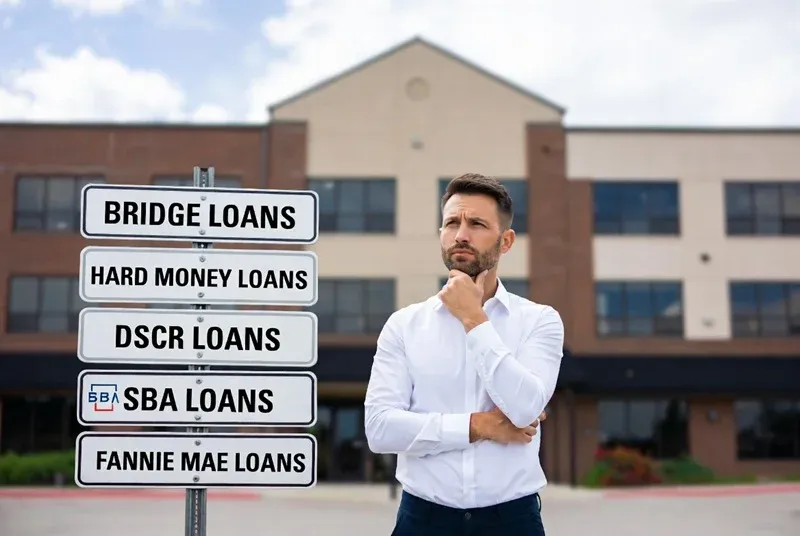
After you are done with commercial loan program comparison, you can kick off by reviewing your credit score, down payment amount, property type, and intended use of funds. Short-term options like bridge loans and hard money loans suit quick acquisitions or renovations, while long-term programs such as DSCR, SBA, and Fannie Mae loans support stable cash-flow properties. Match the loan term to your business plan and cash flow projections to avoid unnecessary costs.
At Commercial Lending USA our team reviews your specific situation and matches you with the program that offers the strongest terms and highest approval probability.
Frequently Asked Questions
What is the lowest interest rate available for commercial loans in 2026?
A: FHA Commercial and Fannie Mae/Freddie Mac programs currently show the lowest ranges, starting as low as 5.25 percent depending on borrower qualifications.
Which commercial loan requires the lowest down payment?
A: FHA Commercial loans allow a minimum down payment of only 15 percent, making them attractive for qualified borrowers.
Do I need full tax returns for every commercial loan?
A: No. Programs such as DSCR loans No Doc Term Loans and certain private lender options do not require tax returns.
Can I use a commercial loan for property construction?
A: Yes. USDA B&I Construction, SBA 7a Construction Private Lender, and Fix N Flip programs support new builds and renovations.
How do I qualify for a DSCR loan?
A: DSCR loans focus primarily on the property's cash flow rather than personal income. They work well for investment properties valued at 150000 dollars or higher that are rented.
Ready to move forward with the right commercial loan program? Our experienced team at Commercial Lending USA specializes in matching borrowers with the best financing solutions. Submit your information today for a fast pre qualification and personalized rate comparison. We make the process straightforward so you can focus on growing your business and real estate portfolio.
0 Comments
Leave A Comment