
Hard Money Lenders for First-Time Investors 2026: Best Options for Beginners & No Experience
If you're a new real estate investor with no experience, no track record, or limited credit history, traditional banks rarely approve loans. One type of loan is a hard money loan, a short-term loan based on the value of the property rather than the borrower's credit history.
That's where hard money lenders for first-time investors come in with fast, asset-based funding that prioritizes the property's potential over your personal finances.
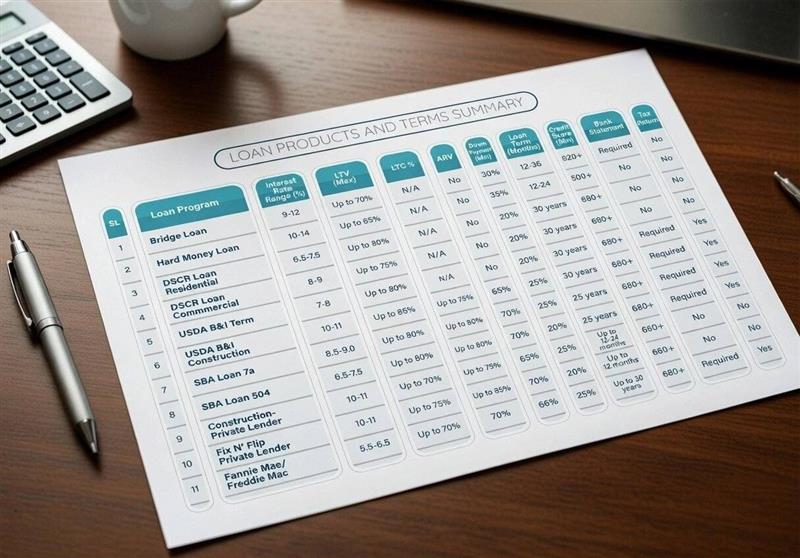
At Commercial Lending USA, our Hard Money Loan program is built exactly for beginners and first-time flippers. With rates 10–14%, up to 65% LTV on ARV, 600+ credit approvals, and no tax returns or bank statements required, we make it possible to fund your first fix-and-flip, rental acquisition, or small commercial project in 7–14 business days.
This makes it an excellent option for new investors who might not have the long-term financial records or real estate knowledge that traditional lenders look for.
Hard money loans can be repaid quickly, whereas bank loans can take weeks or months to get approved. This speed is crucial for deals that require swift completion, such as buying a house at auction or during a sale. It gives first-time investors an edge over other investors.
This 2026 guide explains how hard money works for beginners, our program details, why we stand out, and how to get started, all while avoiding common pitfalls.
Understanding How Hard Money Loans Work for First-Time Investors in 2026
1. How the Hard Money Loan Process Works
Hard money loans are faster and simpler than bank loans. The lender focuses on the property's After Repair Value (ARV) (what it will be worth after fixes), not your credit or income history. This makes approval quick.
Typical Steps:
- Submit basic application (property details, purchase price, rehab plan, exit strategy).
- Lender reviews ARV and deal potential (1-3 days).
- Get term sheet and approval (3-7 days total).
- Provide minimal docs and close (funds wired in 7-14 business days).
2. Private Lenders vs. Traditional Banks
Let's break down private lenders vs traditional banks with an example. Think of traditional bank loans like applying for a home mortgage, which involves lots of paperwork and strict checks on your credit score, income, and debt history. They can take 30–90 days to approve and often say "no" to fixer-uppers or new investors.
Private lenders (including hard money lenders) are the opposite: fast and flexible. They focus on the property itself as the main security, not your personal finances. It's more important to them how much the property might be worth after it's been cleaned up.
This is called its "After Repair Value (ARV)." The sooner you find a house, the sooner a lender looks it over, and if they think it's a good investment, they give you the loan right away, usually within days. In a competitive market, this speed is critical.
Quick Comparison Table
| Feature | Traditional Banks | Private / Hard Money Lenders |
|---|---|---|
| Approval Speed | 30–90 days | 7–14 business days |
| Main Approval Factor | Your credit, income & DTI | Property's After Repair Value (ARV) |
| Interest Rates | Lower (6–9%) | Higher (9–14%) |
| Loan Term | Long (15–30 years) | Short (6–36 months) |
| Best For | Stable buy-and-hold | Fix-and-flip, quick deals, beginners |
| Paperwork | Heavy (tax returns, bank stmts) | Minimal (focus on property details |
3. The Property as Collateral
For a hard money loan, the property is the hero of the story. The loan amount is based on a percentage of the property's current value or its projected ARV. The lender's paramount security is the property itself. If you were to default on the loan, the lender would simply take possession of the property to recoup their investment. This is why they can take on borrowers with less-than-perfect credit: the asset provides a safety net.
4. Typical Loan Terms
Hard money loans are "short-term," meaning they only last for a few months to two years. Because of this, they are great for fix-and-flip jobs where you want to sell the property quickly. Most payments are "interest-only," which helps you keep your monthly costs low while you fix up the house. You pay off the entire loan amount all at once when the loan term ends or the property is sold.
Feature | Hard Money Loans | Traditional Loans |
Primary Collateral | Property (asset-based) | Borrower's financial history |
Speed of Funding | Days to a few weeks | Several weeks to months |
Loan Term | Short-term (6-24 months) | Long-term (15-30 years) |
Credit Requirements | Flexible/Less stringent | A high credit score is needed |
Typical Use Case | Fix-and-flip, short-term projects | Owner-occupied, long-term buy-and-hold |
Interest Rates | Higher (7-15%+) | Lower (3-7%) |
Repayment Structure | Often interest-only | Amortized (principal & interest) |
Ideal Borrower | First-time investors, those needing speed | Homebuyers, seasoned investors |
Why Hard Money Lenders Are Perfect for Beginners & First-Time Investors
Hard money loans are short-term, private financing secured by real estate. Lenders focus on the After-Repair Value (ARV), which means what the property will be worth after rehab, rather than strict debt-to-income ratios (DTI), years of experience, or perfect credit.
Key benefits for new investors in 2026:
- Fast approval & funding: 24–48 hour pre-approvals, full close in 7–14 business days (vs. 45–90 days for banks)
- Flexible qualification: 600+ credit score OK, no tax returns needed
- Higher leverage on deals: Up to 65% of ARV (or purchase + rehab in strong cases)
- No experience required: We welcome hard money lenders for beginners with no experience and guide you through your first deal
- Exit strategy friendly: Pay off via sale, refinance to long-term DSCR/SBA, or rental income
What to Look for in a Hard Money Lender

Choosing the right hard money lender is just as important as finding the right property. A good lender can be a valuable partner throughout your investment journey. Here’s what you should prioritize when evaluating your options:
1. Experience and Reputation
Look for a lender with a proven track record of working with investors, especially those new to the game. An experienced local lender will have a deep understanding of your market, including local property values, rental rates, and contractors. Don't be afraid to ask for references from past borrowers and check online reviews. A reputable lender will be transparent and happy to provide testimonials that demonstrate their professionalism and reliability.
2. Transparent Rates and Terms
Hard money loans often come with higher interest rates and fees than traditional loans, which is the trade-off for speed and flexibility. However, all fees should be communicated upfront. Be wary of any lender who is vague about their costs or seems to have hidden fees. A good lender will provide a transparent term sheet that outlines every cost associated with the loan, so you know exactly what you're paying for.
3. Loan-to-Value (LTV) Ratio
The Loan-to-Value (LTV) ratio is a crucial metric that determines how much a lender is willing to lend you. It is the ratio of the loan amount to the property's value. Hard money loans are typically based on the property's After Repair Value (ARV), which is the estimated value of the property after all renovations are complete. Lenders will often fund up to 70-80% of the ARV. For example, if a property has an ARV of $300,000 and the lender's LTV is 75%, the maximum loan amount would be $225,000. This ratio directly impacts how much cash you need to bring to the table for your down payment.
4. Understanding the Loan Terms
Before you sign anything, make sure you fully understand all loan components.
- Interest Rates: Hard money loans typically have higher rates, ranging from 12% to 15% or more, depending on the lender and the project's risk.
- Loan-to-Value (LTV): As mentioned above, this ratio dictates the amount you can borrow relative to the property's value.
- Origination Fees (Points): A one-time fee charged by the lender to process the loan. It's expressed in "points," where one point equals 1% of the loan amount. For example, a 2-point fee on a $200,000 loan would be $4,000.
- Repayment Schedule: Hard money loans are short-term, with typical terms of 6-24 months. The most common structure is "interest-only" payments, with the full principal balance due in a single lump sum at the end of the term. This is often paid off when you sell or refinance the property.
Top 5 Hard Money Lenders for First-Time Investors

Finding the right lending partner is a crucial step in your first real estate investment. These five hard money lenders are known for their accessibility to new investors, transparent processes, and focus on commercial and residential investment properties.
1. Commercial Lending USA
Best For... Affordable Rates and Streamlined Fix-and-Flip Loans
Commercial Lending USA is a major player in the private lending space, known for its affordable rates and a simplified process for fix-and-flip investors. We have a strong reputation as a correspondent and table lender, making us a great entry point for new investors with no prior flipping experience required. Our focus is on the property's potential and your business plan.
Key Features:
- Loan Amounts: Up to $3,000,000.
- Property Types: Fix-and-flip, bridge loans, and DSCR rental loans.
- No Experience Required: They are an excellent option for investors embarking on their very first project.
- Closing Speed: Can close in as little as 7-14 weeks.
Pro Tip: Use their online pre-qualification tool to get a fast, no-obligation estimate of how much you can borrow without affecting your credit score.
2. New Silver
Best For... Instant Pre-Approval & Technology-Driven Process
New Silver leverages a sophisticated online platform to streamline the loan application and approval process. Their technology-first approach makes them a strong choice for first-time investors who value speed and efficiency. They are known for providing instant pre-approvals, so you can quickly determine your purchasing power.
Key Features:
- Loan Amounts: Starting at $100,000 up to $5,000,000.
- Property Types: Fix-and-flip, new construction, and rental property loans (DSCR).
- Process: Fast funding, often in as little as 5 business days.
- Credit: They do not require a hard credit pull for initial pre-approval.
Pro Tip: Take advantage of their educational resources and online tools, which are designed to help new investors navigate the real estate market.
3. Groundfloor
Best For... New Investors with No Experience and Lower Loan Amounts
Groundfloor is unique because it operates as a peer-to-peer lending platform, allowing individual investors to fund real estate projects. This structure often results in more flexible terms and greater transparency. Groundfloor is particularly welcoming to new investors, with a specific focus on those with no prior flipping experience.
Key Features:
- Loan Amounts: Up to $500,000, making it ideal for smaller deals.
- No Minimum Experience: They explicitly state that no previous experience is required for loan eligibility.
- Transparent Process: All loan details are public, providing a clear understanding of the terms.
- Geographic Reach: Offers nationwide financing opportunities.
Pro Tip: Groundfloor's platform is user-friendly. Be sure to have a well-researched project plan and a clear budget, as they will use this to determine the loan terms.
4. RCN Capital
Best For... Diverse Loan Products and a Focus on Personalized Service
RCN Capital offers a wide range of loan products tailored to various real estate strategies, including fix-and-flip, new construction, and long-term rental loans. They are known for providing personalized service and working closely with investors to find the right financing solution for their specific needs.
Key Features:
- Loan-to-Value: Up to 90% of the purchase price and 100% of renovation costs (not to exceed 75% of ARV).
- Interest-Only Payments: They charge interest only on the outstanding balance, not on the rehab holdback portion of your loan.
- Flexible Terms: Offers loan terms of 12 and 18 months, with no prepayment penalties.
Pro Tip: RCN Capital offers tiered interest rates based on your experience level. While their rates for new investors are slightly higher, they can be a great partner for future deals as you gain experience and qualify for better terms.
5. Lima One Capital
Best For... A Wide Variety of Investment Strategies and In-House Expertise
Lima One Capital is a well-established private lender that provides financing for a broad spectrum of real estate investments. They have an in-house team of experts who work directly with borrowers, eliminating the need for middlemen and speeding up the process. They are a good option for investors looking to expand beyond single-family fix-and-flips.
Key Features:
- Loan Diversity: Offers loans for fix-and-flip, rental properties, new construction, and multi-family units.
- In-House Team: Their direct lending model enables a more streamlined, responsive process.
- Experienced Guidance: Their expert team can offer valuable insights and support to new investors.
Pro Tip: Lima One's expertise in a variety of loan products makes it a good long-term partner. Start with a fix-and-flip loan, and as you build your portfolio, you can explore their long-term rental or multi-family options.
Why Commercial Lending USA Is the Best Hard Money Lender for First-Time Investors & Beginners in 2026
| Lender / Program | Beginner-Friendly (No Experience OK?) | Interest Rate Range | Max LTV / ARV Focus | Max LTC (Purchase + Rehab) | Min Credit Score | Funding Speed | Key Advantages for New Investors | Documentation Required |
|---|---|---|---|---|---|---|---|---|
| Commercial Lending USA Hard Money (Our Top Pick) | Yes – Welcomes first-time flippers & beginners | 10–14% | Up to 65% ARV | Up to 100% rehab (case-by-case) | 500+ | 7–14 days | ARV-focused (ignores strict DTI), no tax returns/bank statements, fast approval for limited credit/history | Minimal (no tax returns/bank statements on most) |
| Typical Competitor A (e.g., Kiavi-style) | Limited – Prefers 1+ deals | 8–14% | Up to 90% ARV | Up to 100% rehab | 660+ | 10–21 days | Good for experienced flippers, but a higher credit barrier | Moderate (some income proof) |
| Typical Competitor B (e.g., Lima One-style) | Moderate – 6+ months preferred | 8–11% | Up to 80% ARV | Up to 90–100% rehab | 660+ | 14–30 days | Various strategies, but experience is often required | Full docs for best terms |
| Typical Competitor C (e.g., New Silver / OfferMarket-style) | Yes, for some – Tech-driven | 10–15% | Up to 85–90% ARV | Up to 100% rehab | 680+ | 7–19 days | Fast tech process, but higher rates & credit minimums | Light to moderate |
| Typical Competitor D (e.g., Constitution / Easy Street-style) | Yes – Beginner programs | 9.5–12% | Up to 75–90% ARV | Up to 90% rehab | 660+ | 10–20 days | Good for new investors, but stricter on track record | Some docs required |
Our Hard Money Loan specifics (updated March 2026):
- Interest rates: 10–14%
- Max LTV: Up to 65% of ARV
- Loan term: 12–24 months
- Min credit: 600+
- Documentation: Minimal — no tax returns or bank statements required
- Best for: Fix-and-flip, first-time purchases, small commercial projects
Notes:
- LTV/ARV Focus: We prioritize the property's After-Repair Value (ARV) over your personal DTI or past deals, making it ideal for hard money lenders for beginners with no experience or track record.
- Why We're #1 for First-Time Investors: 500+ credit approvals, no tax returns required, nationwide funding, and dedicated guidance for new flippers set us apart in 2026.
- Rates/terms as of March 2026; actual offers vary by deal (property type, location, ARV). Apply for a personalized quote.
Hard Money Lenders That Focus on Property Value (ARV) Over Credit & DTI
Most new investors ask: “What hard money lenders focus on property value instead of my debt-to-income ratio?”
Our Hard Money Loan program does exactly that in 2026:
- Up to 65% LTV based on ARV
- Rates 10–14%
- 12–24 month terms
- 500+ credit score accepted
- No bank statements or tax returns required
This is why we’re one of the best hard money lenders for investors with limited credit history and for first-time flippers.
Common Questions from First-Time Real Estate Investors
Many first-time investors have similar questions. Here are answers to some of the most common ones we hear:
- What credit score do I need? Unlike traditional banks, hard money lenders don't have a strict credit score requirement. While a higher score is always better, most lenders are willing to work with scores as low as the mid-600s, as the property's value secures the loan, not your credit history.
- Can I use a hard money loan for a long-term rental property? A hard money loan is designed for short-term, quick-turnaround projects like fix-and-flips. For a long-term rental property, you would typically use a hard money loan as a bridge loan to purchase and renovate the property, then refinance into a long-term rental loan, such as a DSCR (Debt Service Coverage Ratio) loan or a traditional mortgage.
- Are there other loan options besides bridge loans and hard money? Yes. For rental properties, DSCR loans are popular as they qualify you based on the property's cash flow, not your income. Other options include lite-doc loans, which require minimal documentation, making them an excellent alternative for self-employed investors.
- What if my project takes longer than the loan terms? Hard money loans are short-term, typically 6-24 months. If your project runs over, most lenders offer a loan extension, often for a fee. The key is to communicate with your lender early and have a clear exit strategy in place.
Partner with Commercial Lending USA
Getting your first investment property off the ground can be daunting, but you don't have to do it alone. As a seasoned underwriter with over 30 years of experience, we have helped countless investors, from novices to experts, secure the financing they need to succeed.
We've built a robust network of over 200 private lenders and investors, enabling us to find the perfect loan for your unique situation, regardless of property type or project complexity. Beyond just connecting you with a lender, our team provides personalized financial consulting to help you structure your deal for maximum profitability.
Don't let the fear of financing stop you from building wealth through real estate. Take the first step today.
Contact us for a personalized consultation to discuss your project (free of charge) and discover how hard money lending can be your gateway to a successful real estate investment career.
Conclusion
As a first-time real estate investor, it can be hard to find your way around the market, especially when standard banks close their doors because of a lack of experience. The most important thing to remember is that their refusal isn't the end of the road; it's an opportunity to find a better, more efficient way to get where they want to go. Hard money lenders are that way. They offer a quick, flexible option that works well for urgent deals and new investors.
Focus on the property's potential instead of your financial past. A hard money lender can be an essential part of your success. Their quick approvals, freedom, and asset-based underwriting give you the edge you need to get your first fix-and-flip or rental property.
You can reach your real estate business goals if you know what you're doing and find the right lender. Don't let the way traditional banks work stop you. You are ready to go into the world of real estate, and hard money lending gives you the tools to do so with trust.
Related Guides:
- Need longer-term options after your flip? See Step-by-Step Guide to Hard Money Refinancing
- Cash-out after rehab? Check What is Hard Money Cash Out Refinance
- For new construction flips → What Are New Construction Hard Money Loans
- No credit check options → How to Find Hard Money Lenders with No Credit Check
FAQs
How are hard money loans for multi-family properties different from single-family homes?
Hard money loans for multi-family properties are typically larger and more complex. While a lender will still focus on the property's value, they will also scrutinize the rental income and the number of units to determine the loan amount. Multi-family loans often have a higher LTV ratio because the property has multiple income streams, which lowers the lender's risk. However, they may also require more experience from the borrower and have a higher down payment.
What are the risks of using a hard money loan?
While hard money loans offer flexibility, they also come with risks. The high interest rates and short repayment terms can be a burden if your project is delayed or you can't sell the property as quickly as planned. If you default on the loan, the lender can foreclose on the property, and you could lose your entire investment. It's crucial to have a solid exit strategy and a realistic timeline to mitigate these risks.
Is a hard money loan considered a cash offer?
While a hard money loan is not technically an all-cash offer, it functions very similarly in a competitive real estate market. The fast funding and streamlined approval process allow you to close on a property in a matter of days, which is a significant advantage over traditional financing. For sellers, a hard money loan provides a high degree of certainty that the deal will close, giving your offer a considerable edge.
What is the typical down payment for a hard money loan?
The down payment for a hard money loan is generally higher than for a traditional mortgage. Most hard money lenders require a down payment of 10% to 30% of the property's purchase price. The exact amount depends on the lender's LTV ratio, your experience, and the specific property. A higher down payment can help you secure a lower interest rate.
How can I find a reputable hard money lender?
To find a reputable hard money lender, start by asking real estate agents, investors, and contractors in your area for referrals. Look for lenders with a proven track record and strong online reviews on platforms like the Better Business Bureau. Be sure to verify their licensing and check for transparency in their rates and fees. A good lender will have a straightforward process and be willing to answer all your questions without hesitation.
0 Comments
Leave A Comment