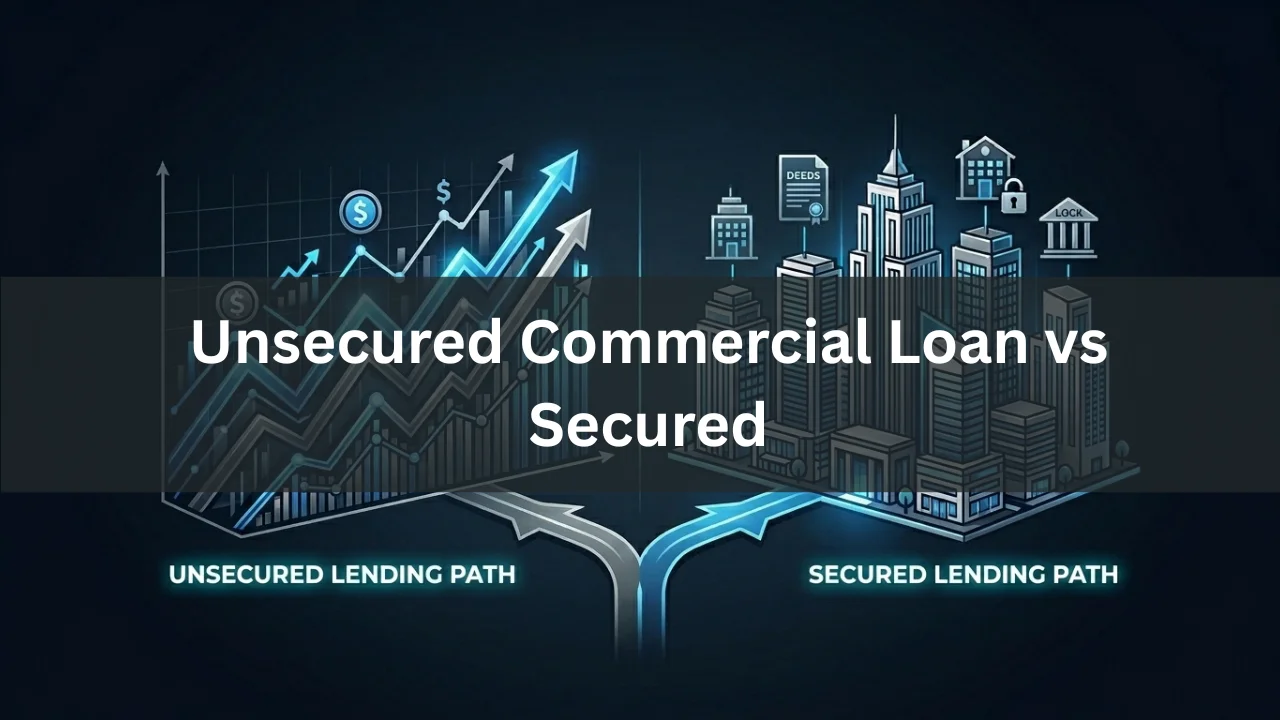
Unsecured Commercial Loan vs Secured: 2026 Guide
If you are searching for an unsecured commercial loan, you are probably looking for fast funding without pledging your property or equipment as collateral. That is a reasonable goal. But before you sign, there is something important to understand: for most real estate and larger business needs, an unsecured loan is often the most expensive way to borrow, and a secured loan gets you far more money at a much lower rate.
This guide explains what an unsecured commercial loan really is, how it compares to a secured loan in 2026, when each one makes sense, and how to decide which fits your business. Commercial Lending USA is a correspondent lender specializing in secured, asset-based commercial financing, and we help business owners find the lowest-cost option for their situation.
What Is an Unsecured Commercial Loan?

An unsecured commercial loan is business financing that does not require collateral. You do not pledge real estate, equipment, or other assets to back the loan. Instead, the lender approves you based mainly on your credit, your business's cash flow, and a personal guarantee.
Because there is no asset backing the loan, the lender takes on more risk. And more risk for the lender means a higher cost for you. This is the single most important fact to understand about unsecured borrowing.
Common types of unsecured business financing include short-term loans, business lines of credit, revenue-based financing, and merchant cash advances.
The Big Myth: Unsecured Loans Are Not Cheaper
A lot of borrowers assume that skipping collateral saves money. The opposite is true. Because collateral lowers the lender's risk, secured business loans carry meaningfully lower rates than unsecured loans, while unsecured rates can run anywhere from about 7% for the strongest bank borrowers to well over 75% APR for products like merchant cash advances.
Compare that to secured commercial real estate financing, where rates in 2026 commonly sit in the 6.5% to 12% range depending on the program. Secured options can go as low as the mid 5% range for real-estate-backed SBA 504 loans. So if you have property or a strong asset to pledge, choosing an unsecured loan usually means paying a large premium for no reason.
Unsecured vs Secured Commercial Loan: Side by Side
Feature | Unsecured Commercial Loan | Secured Commercial Loan |
Collateral | None required | Real estate, equipment, or other assets |
Interest rate | Higher (about 7% to 75%+ APR) | Lower (about 6.5% to 12%) |
Loan amount | Smaller limits | Larger, based on asset value |
Loan term | Short (often months to a few years) | Long (up to 25 to 30 years) |
Approval speed | Fast | Fast to moderate |
Credit requirement | Strong credit and personal guarantee | More flexible, asset-focused |
Best for | Small, short-term working capital | Property, expansion, larger needs |
The pattern is clear. Unsecured loans are built for small, short-term cash needs when you have nothing to pledge. Secured loans are built for property, expansion, and larger amounts, at a fraction of the cost.
When an Unsecured Commercial Loan Makes Sense
Unsecured borrowing is not always the wrong choice. It fits a few specific situations:
- You need a small amount of working capital quickly
- You have no assets you are willing or able to pledge
- The need is short-term, such as covering payroll or inventory for a season
- You have strong personal and business credit
If that describes you, an unsecured line of credit or short-term loan can be a useful tool. Just go in knowing the rate will be higher and the limit lower.
When a Secured Loan Is the Smarter Move
For most of the borrowers we work with, a secured loan is the better answer, especially anything involving real estate. Choose secured financing when:
- You are buying, refinancing, or improving commercial property
- You need a larger loan amount
- You want a lower interest rate and a longer term
- You own an asset you can pledge, such as real estate
- Your income is hard to document, since asset-based loans focus on the property
This is exactly where Commercial Lending USA works. Our programs are secured by real estate, which is what lets us offer far better rates and larger amounts than any unsecured product.
Secured Options That Beat an Unsecured Loan
If your goal is real estate or a larger business need, these secured programs will almost always serve you better than an unsecured loan:
Program | Rate Range (2026) | Best For |
6.5% to 9% | Rental and income property, no tax returns | |
6.5% to 11.5% | Owner-occupied business property | |
9% to 12% | Fast, short-term needs | |
10% to 11% | Buying and renovating to sell | |
8% to 11% | Self-employed borrowers |
Notice that even our higher-rate secured options like bridge and fix-and-flip loans are still far cheaper than a typical unsecured loan, and they fund much larger amounts. That is the power of collateral working in your favor.
How to Qualify for the Right Loan
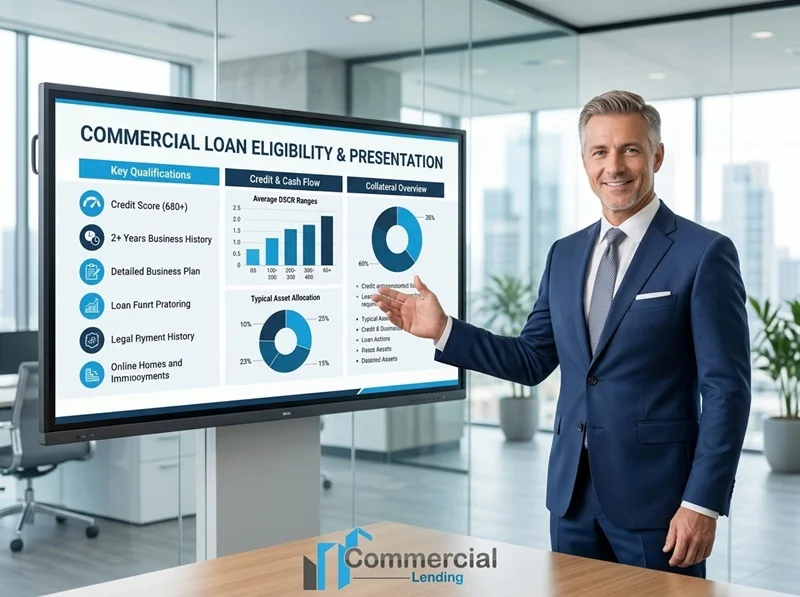
Whichever direction you go, lenders look at a few core things:
- Credit score. Most unsecured business loans require a minimum score around 650 or higher. Secured, asset-based loans are often more flexible because the property reduces the lender's risk.
- Cash flow. Lenders want to see the business or property can cover the payment. For income property, a debt service coverage ratio of 1.25 or higher is the common benchmark.
- The asset (for secured loans). The value and condition of the property drive how much you can borrow.
- Documentation. Unsecured loans lean on your credit and financials. Many of our secured programs, like DSCR and lite-doc loans, skip tax returns entirely.
How to Choose the Right Lender
When comparing lenders, look for:
- Clear terms. The rate, fees, repayment schedule, and any prepayment penalty should be in writing up front.
- The right products. A lender who offers the specific loan you need, not a one-size-fits-all product.
- Honest guidance. A good lender tells you when a secured loan would save you money, rather than selling you the most expensive option.
- Responsive service. Quick, clear communication makes the whole process smoother.
Ready to Find the Right Loan?
Before you take an expensive unsecured loan, let us show you what a secured option could save you. Call (855) 365-9200, email sales@commerciallendingusa.com, or apply online for a free review of your business financing needs.
Frequently Asked Questions
What is an unsecured commercial loan?
It is business financing that does not require collateral. Approval is based mainly on your credit, cash flow, and a personal guarantee. Because there is no asset backing the loan, it carries a higher interest rate and lower borrowing limit than a secured loan.
Are unsecured commercial loans cheaper than secured loans?
No. This is a common misconception. Unsecured loans carry higher rates, often 7% to 75% APR or more, because the lender has no collateral to fall back on. Secured commercial loans are meaningfully cheaper, which is why they are the better choice whenever you have an asset to pledge.
What credit score do I need for an unsecured commercial loan?
Most lenders look for a minimum credit score around 650 or higher, though requirements vary. Secured, asset-based loans are often more flexible on credit because the property reduces the lender's risk.
Can I use an unsecured loan to buy real estate?
You can, but it is usually the wrong tool. Real estate purchases are far cheaper with a secured loan like a DSCR, bridge, or SBA loan, which offer lower rates, larger amounts, and longer terms because the property itself secures the loan.
What is the difference between secured and unsecured business loans?
A secured loan is backed by collateral such as real estate or equipment, which lowers the lender's risk and your rate. An unsecured loan has no collateral, so it costs more and offers smaller amounts. Secured loans are better for property and larger needs, while unsecured loans suit small, short-term working capital.
When does an unsecured loan actually make sense?
When you need a small amount of short-term working capital, have strong credit, and either cannot or prefer not to pledge any assets. For anything involving real estate or larger amounts, a secured loan is almost always the better value.
Does Commercial Lending USA offer unsecured loans?
Commercial Lending USA specializes in secured, asset-based commercial real estate financing, which typically saves borrowers money compared to unsecured options. We are happy to review your situation and recommend the lowest-cost fit, whether that is a DSCR, SBA, bridge, or other secured program.
Disclaimer: Loan rates and terms shown here are based on current programs and market conditions as of 2026 and may change at any time. Rates vary widely by lender, loan type, and borrower profile. All loans are subject to lender approval and underwriting. This article is for general information only and is not financial or legal advice.
0 Comments
Leave A Comment